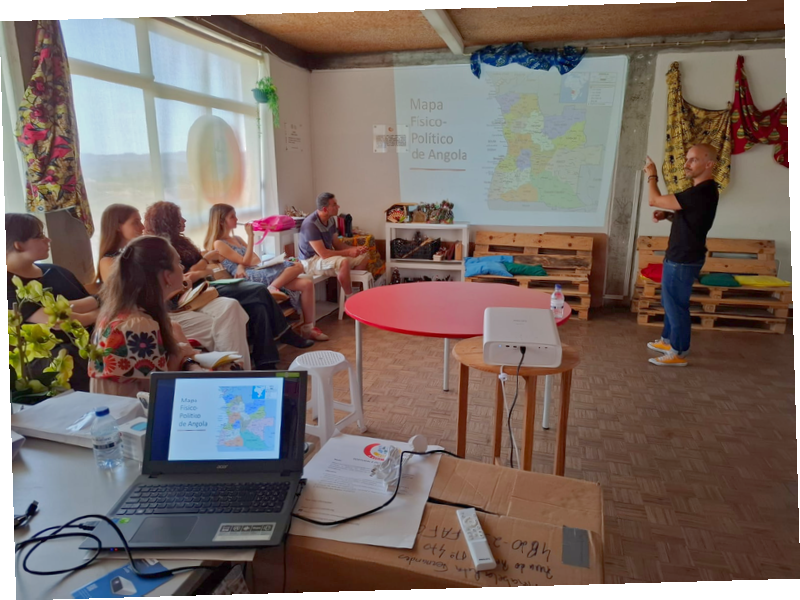
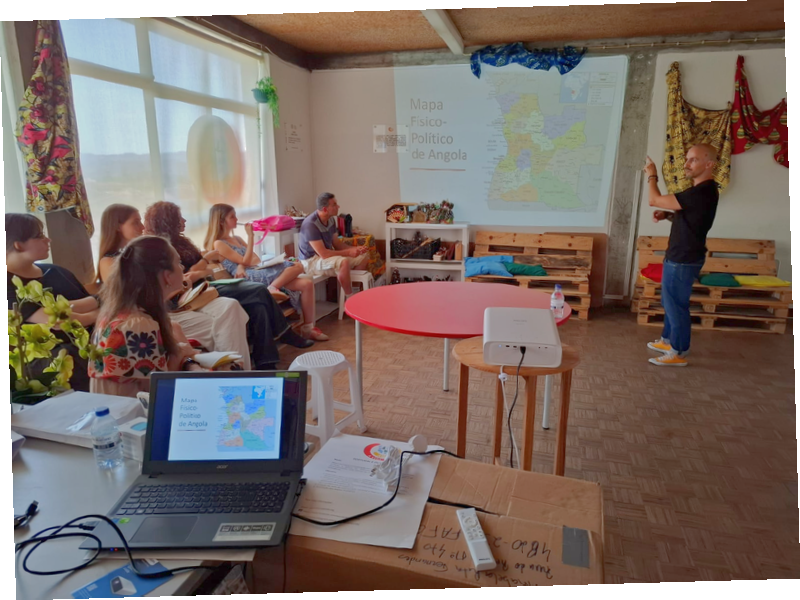
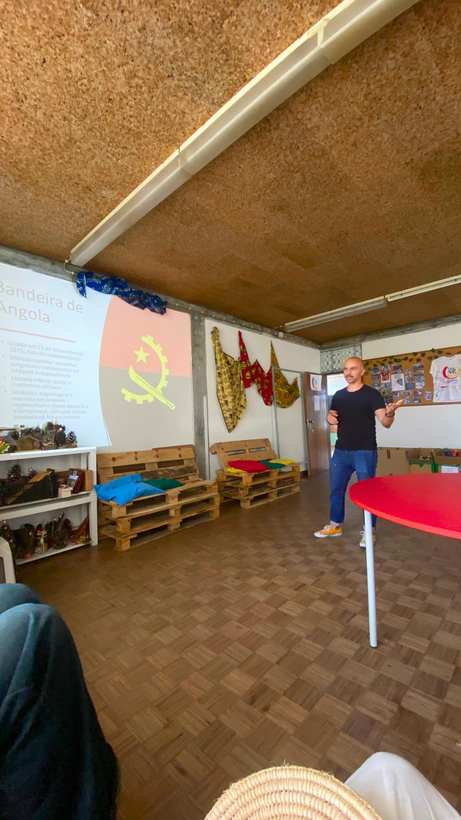
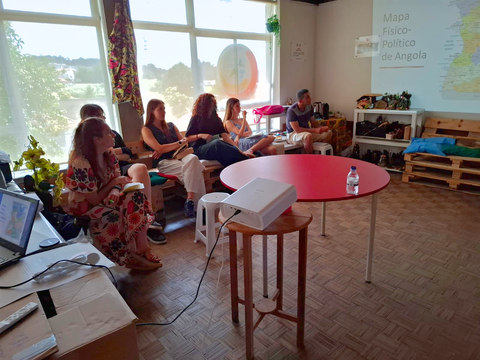
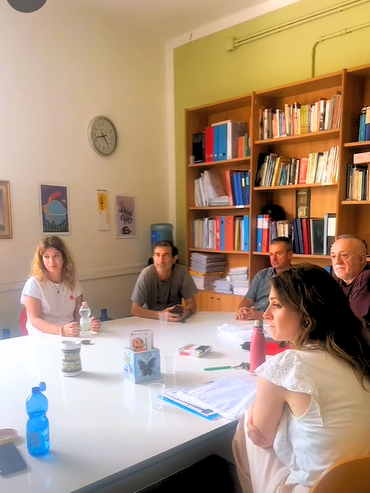
Orientada pelo médico Dr. Gil Sequeira, membro da associação,
sessão teve como principal objetivo preparar os voluntários
para as realidades socioculturais e de saúde que poderão
encontrar durante as missões humanitárias em Angola.
Durante a formação foram abordados temas essenciais, como a
história do país, o mapa físico-político de Angola, e a influência
da religião e das crenças locais nos comportamentos sociais e
nas práticas de saúde. Foi ainda feita uma contextualização
sobre a agricultura e os hábitos alimentares das populações,
realçando a sua ligação com os índices de saúde e nutrição.
O Dr. Gil destacou as doenças mais comuns no território
angolano – como a malária, o HIV/SIDA, a cólera e outras
infeções – e os comportamentos e crenças sociais que, por
vezes, dificultam a prevenção e o tratamento destas condições.
Questões como a desinformação, o recurso a curandeiros e o
estigma associado a certas doenças foram identificadas como
fatores críticos.
Foram também partilhadas medidas preventivas fundamentais
para os voluntários, incluindo cuidados com a alimentação,
vacinação, profilaxia da malária, utilização de repelentes,
higiene pessoal e consumo de água potável.
Apesar de nem todos os membros presentes na palestra
integrarem a missão a Angola em 2025, a informação
transmitida foi considerada extremamente valiosa e pertinente,
contribuindo para a formação contínua dos voluntários.
Led by Dr. Gil Sequeira, a physician and member of the association,
the session aimed to prepare volunteers for the sociocultural and
health realities they may encounter during humanitarian missions
in Angola.
The training covered key topics such as the country’s history,
Angola’s physical and political geography, and the influence of
religion and local beliefs on social behavior and health practices. It
also included an overview of agriculture and dietary habits,
highlighting their connection to public health and nutrition levels.
Dr. Gil outlined the most common diseases in Angola — such as
malaria, HIV/AIDS, cholera, and other infections — as well as the
social beliefs and behaviors that often hinder prevention and
treatment. Issues like misinformation, reliance on traditional
healers, and the stigma associated with certain illnesses were
identified as critical challenges.
Fundamental preventive measures were also shared with
volunteers, including dietary precautions, vaccinations, malaria
prophylaxis, use of insect repellent, personal hygiene, and the
consumption of safe drinking water.
Although not all participants in the session will be joining the 2025
mission to Angola, the information provided was considered highly
valuable and relevant, contributing to the ongoing training of the
association’s volunteers.